Showing posts with label architecture. Show all posts

Sunday, March 1, 2015

The Most Interesting and Intriguing Facts About Mona Lisa

The Most Interesting and Intriguing Facts About Mona Lisa

One of the most popular paintings in the world is the “Mona Lisa” by the universal genius and Renaissance man – Leonardo de Vinci. After more than 500 years since its creation, the painting continuously captured and captivated the attention of millions of people most especially by art enthusiasts and lovers.  It was very popular and controversial for several reasons. Keep that mouse rolling to find the most intriguing and controversial facts about the classical “Mona Lisa”.

1. The Mona Lisa, which is one of the most expensive paintings in the world, is also known as La Gioconda or La Joconde

2. In some instances, it is also called the Portrait of Lisa Gherardini and has been acclaimed as the most sung about, the best known, the most written about, the most parodied and the most visited work of art in the world.

3. La Gioconda is the Italian for “the jocund one”. Jocund means jovial or happy.

4. Lisa Gherardini was the wife of Francesco del Giocondo, a rich merchant who lived in the City of Florence in Italy. The city is one of the most famous cities in the world during the Renaissance period.

5. This extremely famous painting is a half-length portrait of a woman in oil on a poplar panel and was painted between 1503 and 1506.

6. It is currently on permanent display at the Musee du Louver in Paris, the capital of France which is the most visited country in the world.

7. It is a property of the French Republic and was purchased by King Francois I of France after Leonardo da Vinci’s death from his student and assistant Salai, who inherited the painting including his other works.

8. It was bought by King Francois I for 4,000 ecus and kept it at Palace of Fontainebleau and then it was given to Louis XIV and was kept at the Palace of Versailles.

9. The term “Mona Lisa” is taken from the Italian “Ma Donna Lisa” which means “My Lady Lisa”. Mona is the contraction of Madonna.

10. The painting is thought to have been commissioned for the new home of Francesco del Giocondo and Lisa and to celebrate the birth of their second son, Andrea. 


11. The “Mona Lisa” is an unfinished painting by Leonardo da Vinci like many of his work.

12. The painting also spent a short period of time in the bedroom of Napoleon Bonaparte in the Palace of Tuileries.

13. It was moved to the Louvre after the French Revolution and was move again at the Brest Arsenal during the Franco-Prussian War of 1870-1871.

14. After the Franco-Prussian War it was moved back to the Louvre but was move again to several places such Chateau d’Amboise, Loc-Dieu Abbey, Chateau de Chambord and Ingres Museum.

15. When the painting was stolen on August 21, 1911, the Louvre was closed for an entire week to aid in investigation of the theft.

16. The French poet Guillaume Appollinaire was arrested and jailed but was released due to lack of evidence to prove his guilt. His fiend, the famous painter – Pablo Picasso, was also brought in for questioning but was also freed.

17. It took 2 years to finally capture the real thief – Vincenzo Peruggia, an employee of Louvre. He was captured when he tried to sell it to the Uffizi Gallery in Florence, Italy.

18. This Italian patriot’s main reason for stealing the painting is that he believed Leonardo's painting should be returned to Italy for display in an Italian museum.

19. The Mona Lisa painting was exhibited all over Italy and returned to Louvre in 1913. Peruggia was hailed for his patriotism and served only 6 months in jail for stealing the painting.

20. Mona Lisa was among the first portraits to depict the sitter before an imaginary landscape and Leonardo was one of the first painters to use aerial perspective. 


21. One more thing that makes Mona Lisa uniquely intriguing is the fact that it has no clearly visible eyebrows or eyelashes.

22. The painting had suffered several minor damages especially its frame but was repaired carefully accurately by experts.

23. The painting has had many different decorative frames in its history and had undergone several cleaning, re-varnishing, and touch-up.

24. Another fascinating fact and great manifestation of Mona Lisa’s popularity is that about 6 million people view this masterpiece at the Louvre each year.Visitors generally spend about 15 seconds viewing the Mona Lisa.

25. Mona Lisa was exhibited in New York City and Washington D.C. in the United States from December 1962 to March 1963 for a period of 3 months. It was also exhibited in Moscow and Tokyo in 1974.

26. Mona Lisa is the 5th most expensive painting in the world. Its 1962 price of $100 million is approximately $700 million in 2010.

27. A Mona Lisa smoking a pipe was created by Sapeck in 1883 while Marcel Duchamp created a Mona Lisa with a moustache and a goatee and added the inscription "Elle a chaud au cul" which literally mean "she has a hot ass".

28. Some parts of the painting were damaged in several occasions. The first was in 1956, when the lower part of the painting was severely damaged by a vandal who doused the painting with acid.

29. The second was on December 30, 1956, when a rock was thrown by a young man named Ugo Ungaza Villegas from Bolivia that resulted in the loss of a speck of pigment near the left elbow. The damaged was later painted over.

30. The third attack on the painting occurred in April 1974 at the Tokyo National Museum when a lame woman sprayed red paint at the painting because she was upset by the museum's policy for disabled people. The painting was undamaged. 


31. The most recent attack on the painting was on August 2, 2009 when a Russian woman threw a terra cotta mug at the painting because of disappointment when she was denied French citizenship. The mug was purchased at the museum. The painting was undamaged.

32. To avoid further attacks and damages, the painting is now shielded by a bulletproof glass.

33. To avoid future damages, the painting is currently kept under strict, climate-controlled conditions maintaining humidity at 50% ±10%, and temperature between 18 and 21 °C.


Sunday, October 2, 2011

The World’s Oldest Fountains But Still Grandiose and Beautiful

In Europe, you’ll find the oldest but still beautiful and captivating fountains. These tourist attractions were built hundreds of years ago but still they are functional and continue to attract visitors. Take a look at the oldest and grandiose fountains in the world.

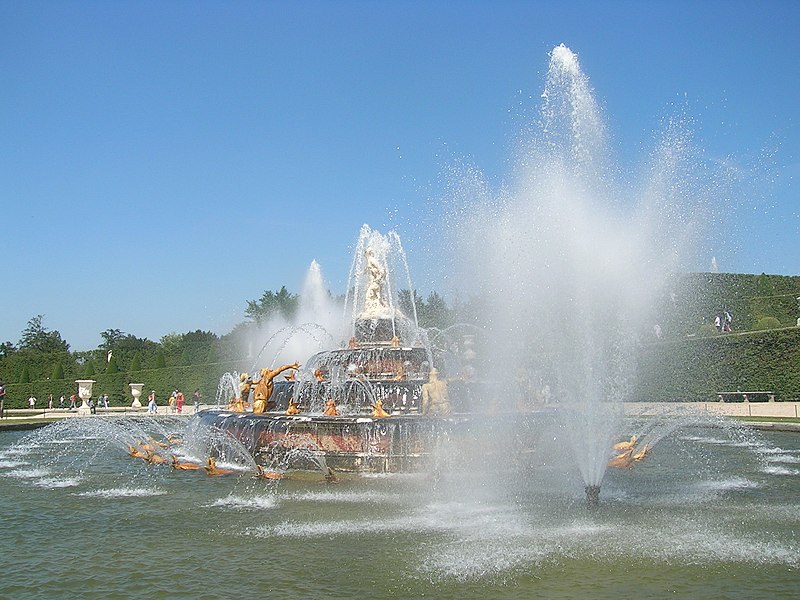
1.) Versailles Fountain – Versailles, France


One of the most stunning falls in the world is the Versailles Fountain which is part of the Gardens of Versailles. This awesome garden is 800 hectares in area in which most of its landscapes are in the classic French Garden style.

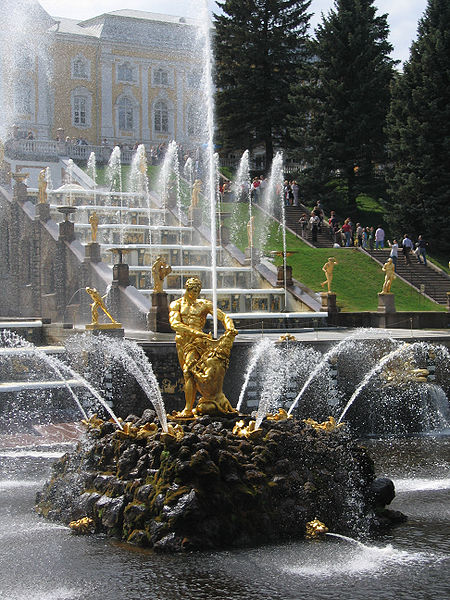
2.) Samson and the Lion Fountain – Saint Petersburg, Russia


The captivating Samson and the Lion Fountain is located in front of the magnificent Peterhof Palace in St. Petersburg, Russia.


Samson and the Lion Fountain were created between 1800 and 1802.


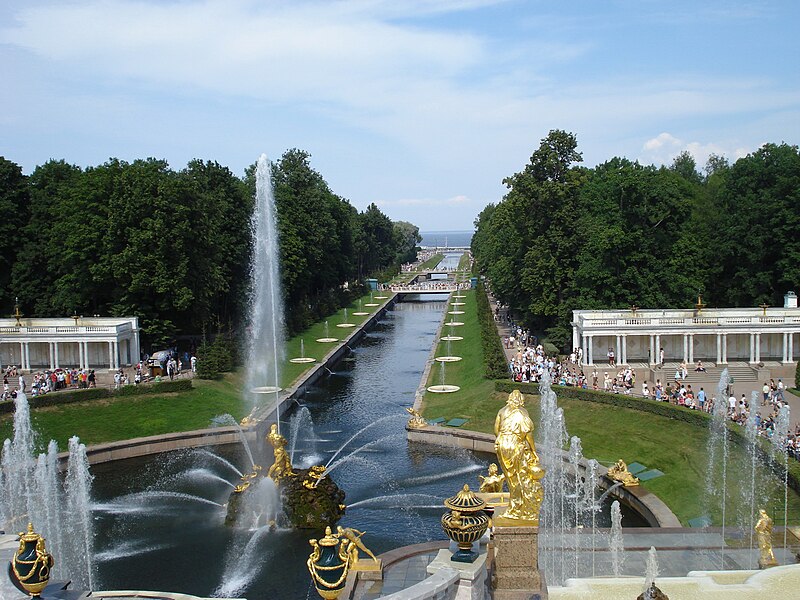
The Peterhof Palace is a series of palaces and gardens located in St. Petersburg, Russia. Peterhof is Dutch or German for "Peter’s Court". These structures were laid out on the orders of Peter the Great.


These Palaces and gardens are sometimes referred as the "Russian Versailles". This awesome site was declared a UNESCO World Heritage Site.

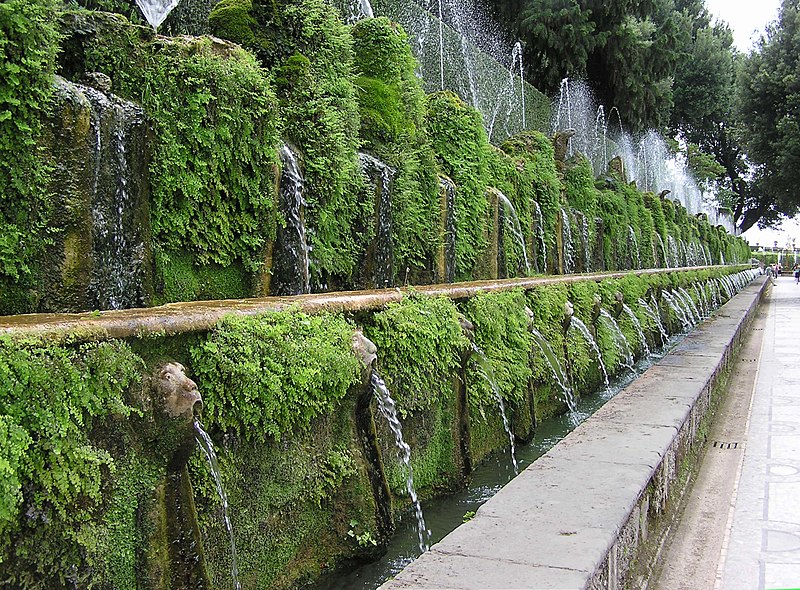
3.) Le Cento Fontane (The Hundred Fountains) – Tivoli, Italy


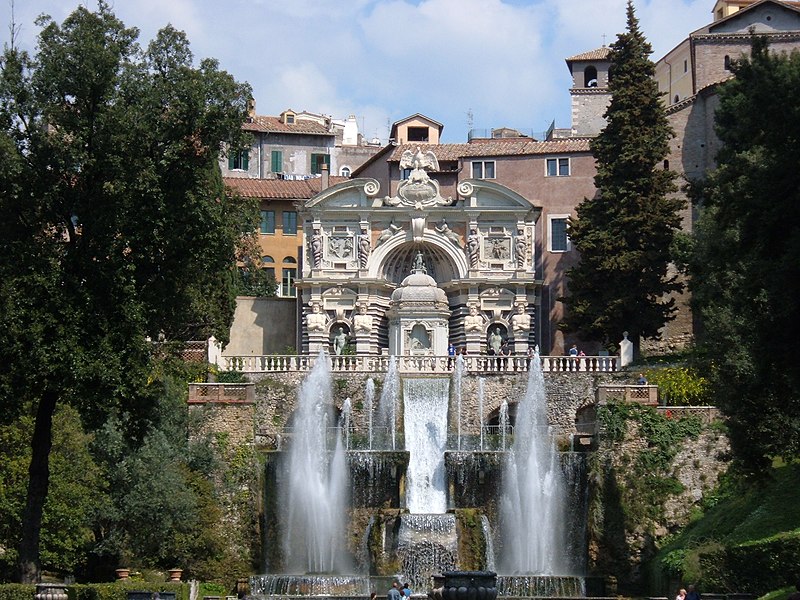
La Cento Fontane or The Hundred Fountains are located in Villa Este, Tivoli in Italy.

4.) Villa d'Este Fountain – Tivoli, Italy


The majestic Villa d'Este Fountain is located at Tivoli, near Rome, Italy. It is listed as a UNESCO World Heritage Site and is considered as a fine example of Italian Renaissance garden and Renaissance architecture.

5.) Tyler Davidson Fountain – Ohio, USA


The Tyler Davidson Fountain is a statue and fountain located in Cincinnati, Ohio. This impressive structure is regarded as the symbol of the city and one of the most-visited attractions in the area. It was dedicated in 1871 and is the centerpiece of Fountain Square. The fountain is turned off each winter and turned on again in April for the first home game of Major League Baseball’s Cincinnati Reds, the oldest professional baseball team.

See also these spectacular attractions:

Wednesday, September 21, 2011

The Seven Lesser Known But Magnificent Wonders of The World

These awesome structures are among the most popular tourist attractions in their respective place of locations.

1.) Pena National Palace – Portugal


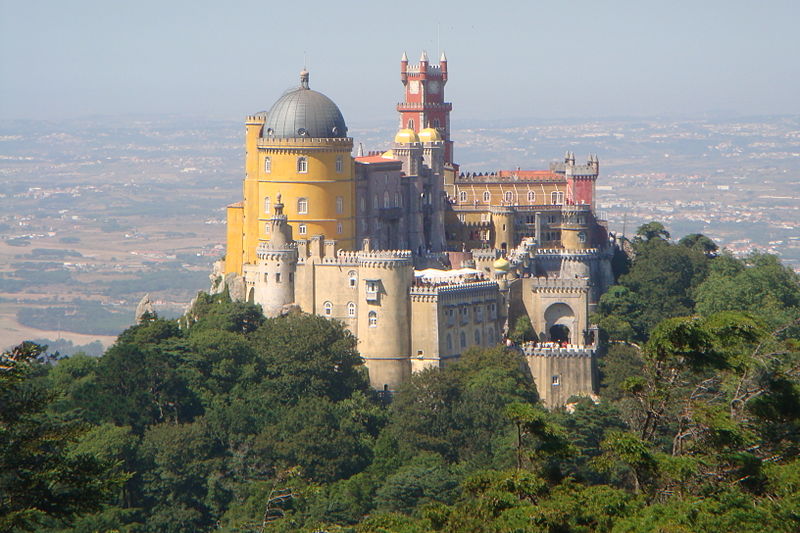
The Pena National Palace is a magnificent palace in Sintra, Portugal. This UNESCO World Heritage Site stands on the top of a hill above the town of Sintra, and on a clear day it can be easily seen from Lisbon, the country’s capital. This national monument is one of the “Seven Wonders of Portugal”.

2.) Saint Basil’s Cathedral – Russia


The official name of St. Basil’s Cathedral is Cathedral of the Protection of Most Holy Theotokos on the Moat. This Russian Orthodox Church is located on the Red Square in Moscow, the capital of Russia. This UNESCO World Heritage Site building's design, shaped as a flame of a bonfire rising into the sky, has no analogues in Russian architecture: "It is like no other Russian building. Nothing similar can be found in the entire millennium or Byzantium tradition from the 5th to 15th century.


3.) St. Giles’ Church – United Kingdom


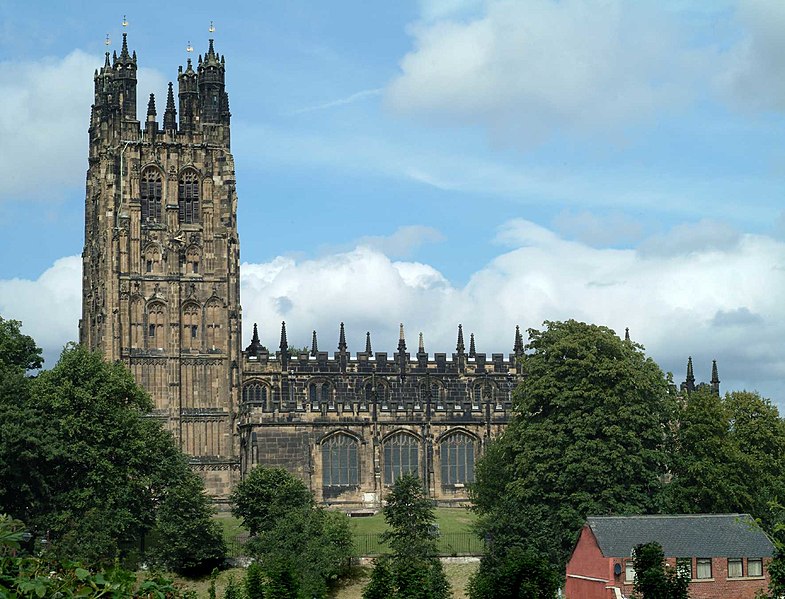
The classical St Giles' Church is the parish church of Wrexham, Wales in the UK. The tower of this edifice is traditionally one of the “Seven Wonders of Wales”. Its richly-decorated tower is 135-feet high and has four striking hexagonal turrets.

4.) Kiev Pechersk Lavra – Ukraine


Kiev Pechersk Lavra or Kiev Monastery of the Caves in English is a historic Orthodox Christian monastery located in Kiev, the capital of Ukraine. It was founded in 1015 and had been the center of Eastern Orthodox Christianity in Eastern Europe. This UNESCO World Heritage Site is one of the “Seven Wonders of Ukraine”.

5.) Las Lajas Sanctuary – Colombia


Las Lajas Sanctuary is a basilica church built in the most peculiar site – inside the canyon of the Guaitara River in Ipiales, Colombia. Its construction lasted for 33 years from 1916 to 1949. There was a claim that an apparition of the Virgin Mary was seen in the area. The miraculous image on the stone is still visible today.

6.) Malbork Castle


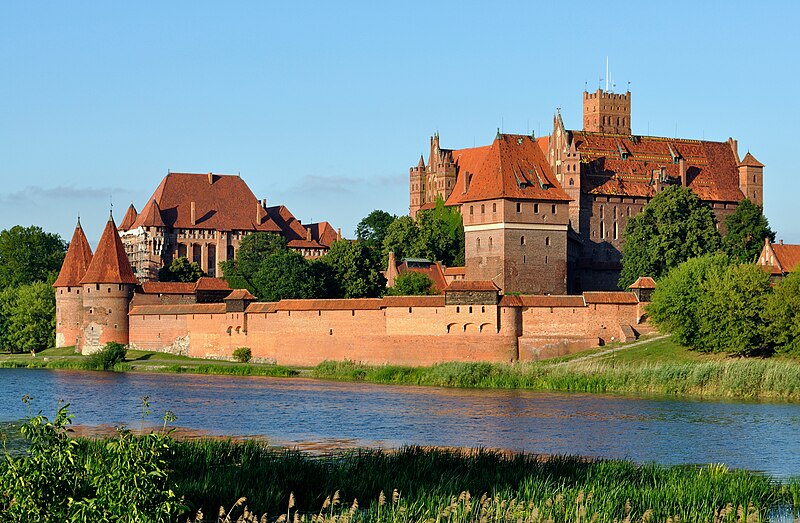
The Malbork Castle is the largest castle in the world by area. This more than 500-year-old edifice was the largest brick Gothic castle on its completion in 1406. It was declared a UNESCO World Heritage Site in 1997.

7.) Studenica Monastery – Serbia


The Studenica monastery is a 12th-century Serbian Orthodox monastery in Serbia. This UNESCO World Heritage Site is one of the largest and richest Serb Orthodox monasteries. The monastery is best known for its collection of 13th- and 14th century Byzantine-style fresco paintings.

Bonus
*Cathedral of Saint Sava – Serbia


The Cathedral of Saint Sava is an Orthodox Church located in the capital of Serbia – the City of Belgrade. It is the largest Orthodox cathedral on the Balkans, and one of the largest Orthodox cathedrals in the world. The church bells are tuned to play "Hymn to Saint Sava", and can be heard in the entire city.

See also
Enhanced by Zemanta

Saturday, September 17, 2011

Seven Wonder Fountains in the World


Fountains are beauties to behold that is why many places in the world like parks and plazas contain one or more fountains. They attract people more than anything else. Here are some of the most amazing fountains in the world.

1.) El Alamein Fountain – Sidney, Australia


The El Alamein Fountain is a fantastic fountain located in the beautiful city of Sidney in Australia. It was designed by Robert Woodward. It was the first "dandelion" fountain created between 1959 and 1961. It is also called El Alamein Memorial Fountain because it was commissioned as a memorial to soldiers who died in 1942 during the Second World War in two battles at El Alamein, Egypt.

2.) Peterhof Sun Fountain – St Petersburg, Russia


The simple but captivating Peterhof Sun Fountain is an antique fountain created in 1723. This more than 200 year-old fountain is actually a musical fountain and is one of the oldest of its kind.

3.) Canberra Metal Fountain – Canberra, Australia


The Canberra Metal Fountain is a uniquely designed and structured fountain located in Canberra – the city capital of Australia. This metal fountain looks like a multiple half-open umbrellas.

4.) Eve Fountain – St. Petersburg, Russia


Another beautiful fountain located in the lower gardens of Peterhof is the Eve Fountain. The central figure of the structure is the statue of Eve, hence the name. it is one of the oldest functioning fountain in the world.

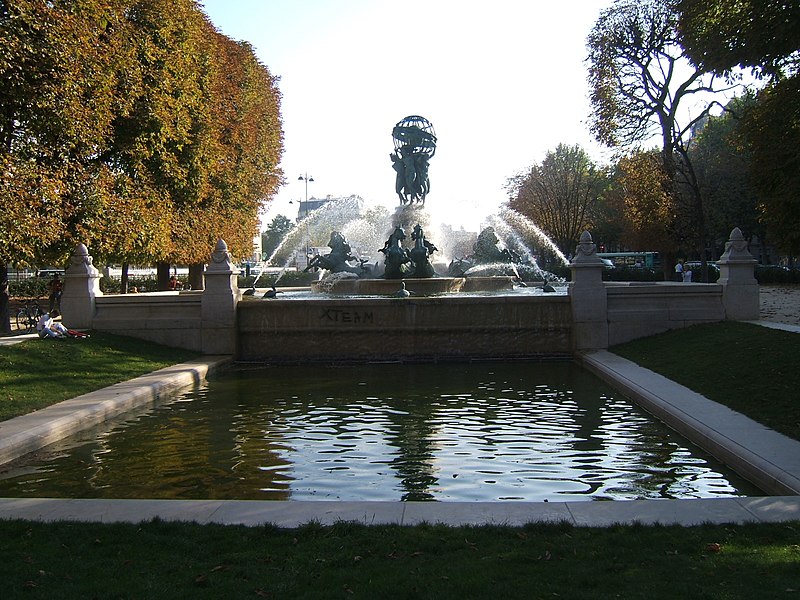
5.) Fontaine de l'Observatoire – Paris, France


The Fontaine de l'Observatoire is a monumental fountain located south of the Jardin du Luxembourg, one of the most beautiful gardens in the world. It is located in the 6th arrondissement of Paris. The central figure in the fountain is the sculpture created by Jean-Baptiste Carpeaux. It was dedicated in 1874. This structure is also known as the Fontaine des Quatre-Parties-du-Monde, for the four parts of the world embodied by its female figures, or simply the Fontaine Carpeaux.

6.) Cloche Fountain – St. Petersburg, Russia


The Cloche Fountain is a uniquely structured and designed fountain in the Peterhof garden of St. Petersburg, Russia. It was constructed in 1732 and is one of the oldest fountains in the world.

7.) Pyramid Fountain – St. Petersburg, Russia


Another mesmerizing fountain located in the Peterhof Gardens f St. Petersburg, Russia is the so-called Pyramid Fountain.

See also these spectacular attractions; 

Saturday, September 10, 2011

The Eight Magnificent and Historic Russian Kremlins

Some of the most prolific forts in the world can be found in Russia. In Russia, fort or citadel is known as Kremlin. Here are the 8 most magnificent forts in this huge country. These Kremlins are popular Russian tourist attractions.

1.) Peter and Paul Fortress


The Peter and Paul Fortress is a grandiose structure located in St Petersburg, Russia. It is the original citadel of St. Petersburg founded by Peter the Great in 1703 and from 1706-1740. The fortress contains many remarkable buildings clustered around the Peter and Paul Cathedral, which has a 123.2 m bell-tower - the tallest in the downtown.

2.) Moscow Kremlin


The Moscow Kremlin is a notable and historic fortified complex in Moscow, the capital of Russia. It is situated at the center of the city and overlooks the River Moskva, Saint Basil’s Cathedral, Red Square and Alexander Garden. Moscow Kremlin is the best known of Kremlins or Russian citadels. It includes 4 palaces, 4 cathedrals and the enclosing Kremlin Wall with Kremlin towers. The complex serves as the official residence of the President of Russia..

3.) Ivangorod Fortress


Ivangorod Fortress is a remarkable fortification building located in the town of Ivangorod, Russia. This Russian medieval castle was established in 1492 and overlooks the Narva River Narva City, Estonia. This quadrilateral castle measures 150 m2 with walls 14 meters tall.

4.) Shlisselburg Fortress


Shlisselburg Fortress is magnificent-looking located in Shlisseburg, a town in Leningrad Oblas, Russia. It was constructed at the head of the Neva River on Lake Ladoga. The town and the fortress are UNESCO World Heritage Sites.

5.) Suzdal Kremlin


The Suzdal Kremlin is a beautiful fort and is the oldest part of the City of Suzdal. It dates back from the 10th century. Like other Russian Kremlins, it was originally a fortress or citadel and was the religious and administrative center of the city. It is most notably the site of the Cathedral of the Nativity. This fortress, which was constructed in the 11th century, is a UNESCO World Heritage Site together with several structures in the neighboring city of Valdimir.

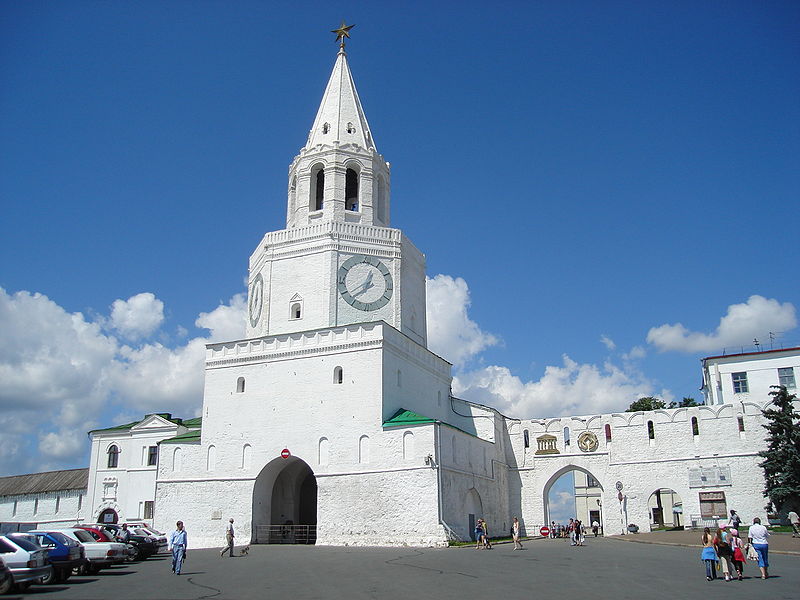
6.) Kazan Kremlin


The Kazan Kremlin is the chief historic citadel of Tatarstan, situated in Kazan City. It was built during the time of Ivan the Terrible and was declared in 2000 a UNESCO World Heritage Sites.

7.) Novgorod Kremlin


Novgorod Kremlin is also known as “The Detinets”, the ancient name for the Kremlin or fortress. It stands on the left bank of the Volkhov River. The fort was constructed from 1484 to 1490 with a length of 545 meters and a width of 240 meters with 9 surviving towers. The tallest tower, the Kokui tower is capped by a silver dome. The walls are 1,487 meters in circumference. Today, it is possible to enter this tower and climb to the top.

8.) Brest Fortress


Brest Fortress is a 19th century Russian fortress in Brest, Belarus. It is one of the most important Soviet World War II war monuments commemorating the Soviet resistance against the German invasion on June 22, 1941. This fort is originally the largest 19th century fortress of the Russian Empire. It has a total area of 4 km² with a fortified area 30 km in circumference. It is formerly known as Brest-Litovsk Fortress.

See also 

Friday, September 9, 2011

Remarkable Forts for Tourist Destinations in France

France is the most visited country in the world. The country contains many historic and beautiful tourist destinations. Here are some of the most historic forts in France.


1.) Citadel of Besancon


The Citadel of Besancon in located in France-Comte, France. This historic fortress, which is a UNESCO World Heritage Site, occupies 11 hectares on Mount Saint-Etienne. This well preserved fortification is an important tourist site receiving more than a quarter of a million visitors annually due both to its own characteristics and because it is the site of several museums. There is a zoo, an insectarium, an aquarium, vivariums, a noctarium, a climatorium, a pedagogical exhibit on evolution, botanical gardens, and a children's farm in the site. There is also a restaurant and shops.

2.) Bastille


The Bastille is a fort constructed on a hill 476 meters above sea level overlooking the city of Grenoble, France. It is the main tourist site of the Grenoble area receiving about 600,000 visitors every year.

3.) Fort de Tournoux


The Fort de Tournoux is located in Uvabe Valley in the French Alps. This fortification complex was built between 1843 and the early 20th century to defend France against invasion from Savoy and Italy. It was described as the "Military Versailles of the 19th century," resembling a Tibetan monastery on the mountainside above the Ubaye.

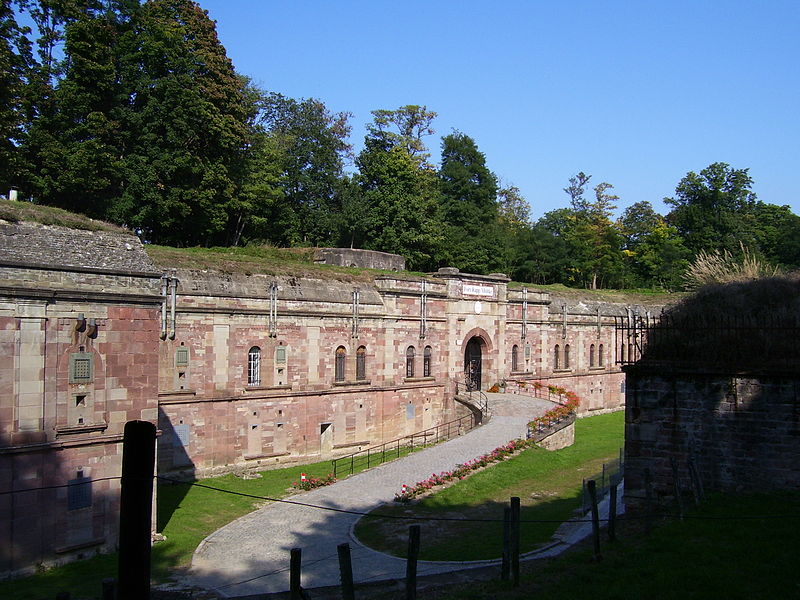
4.) Fort Rapp


Fort Rapp is a fortifications located in Reochstett, Strasbourg. It was built between 1872 and 1874. This fort has 200 rooms and was able to host a garrison of 800 men. It was protected by 18 cannons of 90-150mm. The site is open for tourist visits on weekends from mid April to late September.

5.) Fort Saint-Jean


Fort Saint-Jean is located in Marseilles. It was built in 1660 at the entrance to the Old Port. The fort was built in response to a local uprising against the governor, rather than for the defense of the city: their cannons pointed inwards towards the town, not outwards towards the sea.

6.) Fort de Joux


The Fort de Joux is located in La Cluse-et-Mijoux in the Doubs department in the Jura Mountains of France. It is originally a castle transformed into a fort. It served as a prison for successive French governments between the 17th and 19th centuries. In this capacity, Fort-de-Joux is best known for serving as the site of imprisonment for Toussaint Louverture, who died there in 1803.

Presently, the fortress houses a museum of arms which exhibits more than "six hundred rare weapons" dating from the early 18th to the 20th centuries, including a rare 1717 rifle. The castle also has a well which, at 120 meters, is one of the deepest in Europe. It is also known as Château de Joux.
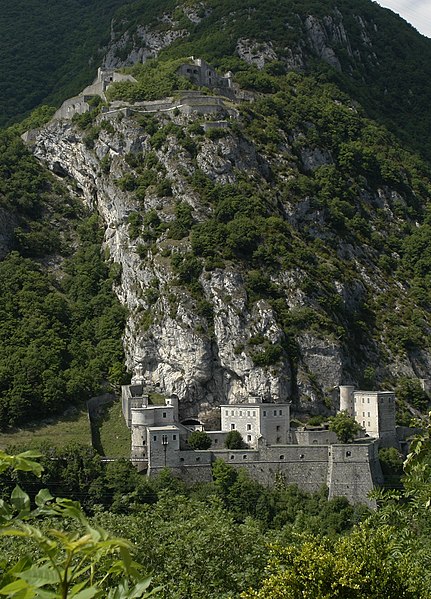
7.) Fort l'Écluse


Fort l'Écluse is located up high near the Collonges Vllage in Ain, France. Presently, the fort is open during the summer months for visiting, and it is possible to use the subterranean staircase with 1,000 steps.. In addition, there are many hiking trails in the area which allow hikers.

8.) Fort Carre


Fort Carre is a magnificent 16th century fort located on the outskirts of Antibes, France. The fort is notable as the location of some of the scenes of James Bond film – Never Say Never Again.
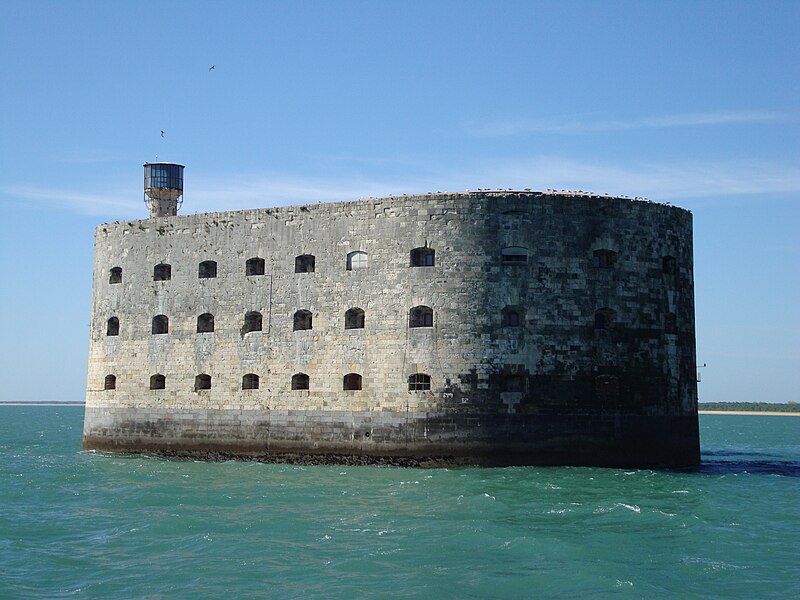
9.) Fort Boyard


Fort Boyard is located in the Pertuis d’Antioche straits, on the west coast of France. This fort is 61 meters in length, 31 meters in width and with walls 20 meters high. This unique fort is completely surrounded by water.

10.) Tour Royale


The Tour Royale is 16th century fort built to protect the entrance of the Petit Rade, the naval port of Toulon. The fort’s tower was sixty meters in diameter and seven meters thick. Construction began in 1514 and was finished in 1524. Because of its impressive size, the residents of Toulon called it "La Grosse Tour."

11.) Fort Enet


Fort Enet is located in the Pertuis d’Antioche in Charente-Maritime, France. This fortification can be accessed at low tide on foot and can be visited. Construction of Fort Enet was started in 1810 by Napoleon I, following the devastating 1809 Battle of the Basque Roads.

12.) Fort de Bellegarde


The Fort de Bellegarde is located above the town of La Perthus, in the Pyrenees-Orientales department, France. This 17th century fortification is open to the public between June and September only and includes exhibits on the history of the fort, its archaeology and the surrounding area.


See also

Enhanced by Zemanta